
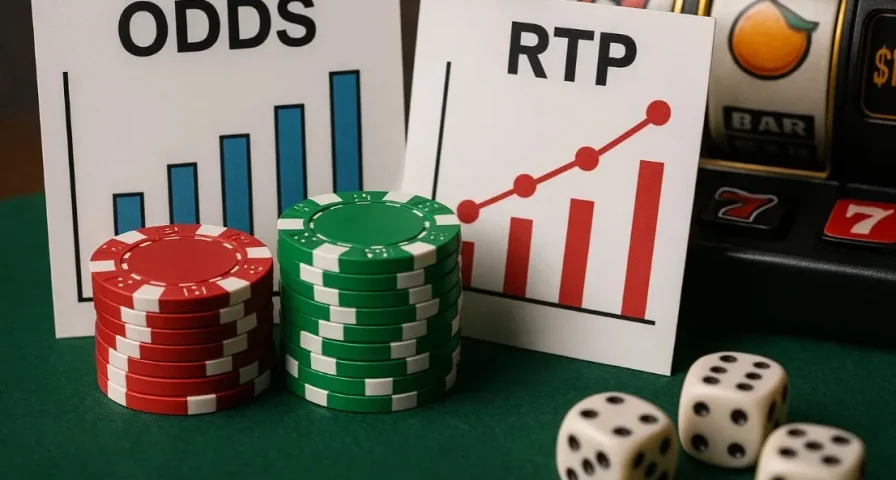
Betting and online casinos increasingly coexist on the same platforms, offering players access to both sports wagers and casino games within a single account. While this convergence feels seamless on the surface, the logic behind sports betting and casino gameplay is fundamentally different. These differences are not cosmetic; they define risk, value, and long-term outcomes for players.
At the center of this distinction are two core concepts: odds in sports betting and RTP (Return to Player) in online casinos. Understanding how these systems work — and how they interact on hybrid gambling platforms — is essential for anyone navigating both forms of wagering.
This article explores how odds and RTP function, why they are not interchangeable, and how hybrid platforms shape player behavior by combining both models.
Why betting and casino games follow different mathematical logic
Sports betting is based on probability estimation of real-world events. Odds reflect a bookmaker’s assessment of outcomes, adjusted for margin and market behavior. Casino games, by contrast, operate within closed mathematical systems where outcomes are generated internally and probabilities are fixed.
This distinction matters because it defines how value is perceived. In betting, players search for favorable odds relative to their own assessment of probability. In online casinos, players engage with games where expected value is predetermined over the long term.
Hybrid platforms bring these models together, but they do not merge their logic. Instead, they place two fundamentally different risk frameworks side by side.
How betting odds shape player expectations
Betting odds represent the potential payout for a given event and include the bookmaker’s margin. Decimal odds, commonly used across global betting markets, show total return including stake. Lower odds indicate higher implied probability, while higher odds reflect lower likelihood outcomes.
Crucially, odds are dynamic. They move in response to market action, injuries, weather, and public sentiment. This fluidity creates the perception of opportunity. Players feel that timing, analysis, and insight can influence results.
In betting, long-term success depends on identifying value — situations where the odds offered are higher than the true probability of an outcome. This creates a skill-based narrative, even though variance remains significant.
How RTP defines online casino value
Online casino games are built around RTP, a theoretical percentage indicating how much of the total wagered amount is returned to players over time. A slot with 96% RTP, for example, is designed to return €96 for every €100 wagered across a very large number of spins.
Unlike odds, RTP does not change in response to player behavior or external factors. It is embedded in the game’s code. Short-term outcomes may vary wildly, but the long-term expectation remains constant.
This fixed structure removes the concept of “value hunting” as it exists in sports betting. Instead, players interact with volatility, pacing, and game design rather than probability estimation.
Why hybrid platforms feel confusing to many players
When betting and online casino games are presented side by side, players often assume similar logic applies to both. This assumption leads to misinterpretation of results and unrealistic expectations.
Before comparing the two systems directly, it is useful to highlight the core conceptual differences that shape player experience:
- Betting odds fluctuate based on information and market demand
- Casino RTP remains static, regardless of session outcomes
- Betting rewards analysis and timing
- Casino games reward tolerance for variance
- Betting outcomes depend on external events
- Casino outcomes are internally generated
These differences explain why strategies that feel logical in betting often fail when applied to casino games.
Direct comparison of odds-based betting and RTP-based casino play
Before reviewing the table below, it is important to understand that neither system is inherently superior. They serve different psychological and economic purposes within hybrid platforms.
| Aspect | Sports Betting | Online Casino Games |
|---|---|---|
| Core metric | Odds | RTP |
| Probability source | Real-world events | Internal algorithms |
| Value perception | Dynamic | Fixed |
| Skill influence | Medium to high | Very low |
| Outcome timing | Event-dependent | Instant or short cycles |
This comparison highlights why hybrid platforms attract diverse player profiles. Some users are drawn to analytical decision-making, while others prefer immediate outcomes and structured volatility.
How hybrid platforms encourage cross-participation
Hybrid gambling platforms are designed to move players between betting and casino environments. Interface design, promotions, and balance flow all support this behavior.
For example, a player who places a sports bet may use idle time to play casino games while waiting for results. Conversely, casino players may explore betting markets after receiving bonuses or cashback.
This cross-participation benefits platforms by increasing engagement time, but it also requires players to mentally switch between two different risk models. Those who fail to recognize the shift often misjudge results.
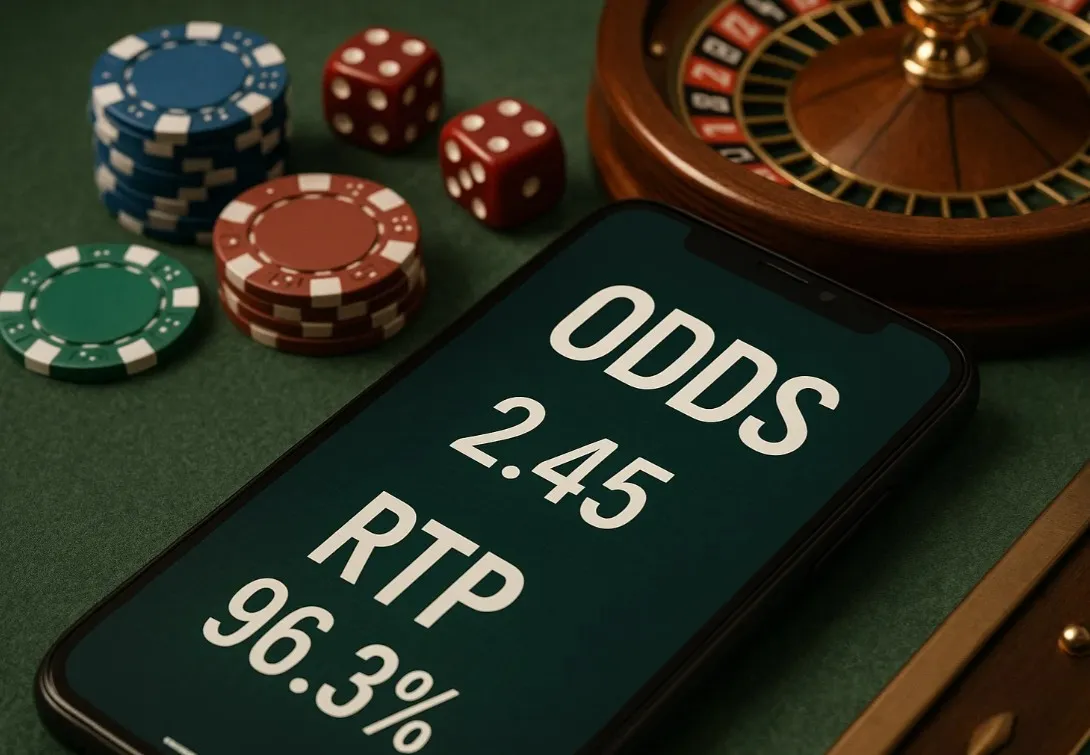
Volatility perception across betting and casino sessions
One of the most important psychological differences between betting and online casinos is how volatility is perceived. In betting, variance is spread over time, often with delayed resolution. In casino games, variance is compressed into rapid cycles.
Hybrid platforms amplify this contrast. A player may experience long waiting periods in betting, followed by intense swings in casino play. Without awareness, this can distort bankroll perception and decision-making.
Understanding volatility as a structural feature rather than a personal outcome helps players maintain realistic expectations across both formats.
Strategic implications for players using both systems
Players who engage with both betting and online casinos benefit from separating their mindset. Betting rewards patience, information processing, and selective action. Casino games reward session control, pacing awareness, and volatility tolerance.
Treating casino play as if it were betting leads to frustration. Treating betting like a slot machine leads to impulsive decisions. Hybrid platforms require mental compartmentalization to be navigated effectively.
Long-term behavior patterns on hybrid gambling platforms
Data from hybrid platforms shows that players who understand the distinction between odds and RTP tend to exhibit more stable behavior. They switch formats intentionally rather than reactively, using betting for analysis and casino play for entertainment.
Those who blur the lines often experience rapid bankroll swings and emotional decision-making. This is not due to lack of discipline, but lack of structural understanding.
Hybrid gambling environments reward informed engagement more than blind participation.
Conclusion
Betting and online casinos coexist on modern platforms, but they operate on entirely different mathematical and psychological principles. Odds and RTP are not comparable metrics — they define separate worlds of risk, value, and expectation.
Players who understand these differences gain clarity rather than control. They recognize why betting feels analytical and why casino games feel volatile, even when outcomes are random. In hybrid platforms, success is not about mastering one system, but about knowing when you are operating in each.
Awareness, not strategy, is the key advantage when betting and online casinos intersect.




Never really thought about odds and RTP this way, but it makes sense why switching between betting and slots can feel so different. With sports, you feel like you’re making calculated decisions, but in casino games it’s more about handling streaks and not overreacting to short-term results.
I had a similar realization when trying platforms like cloudbet casino, where both betting and casino sections are available. It really shows how important it is to understand which system you’re playing in, otherwise it’s easy to misjudge your results.